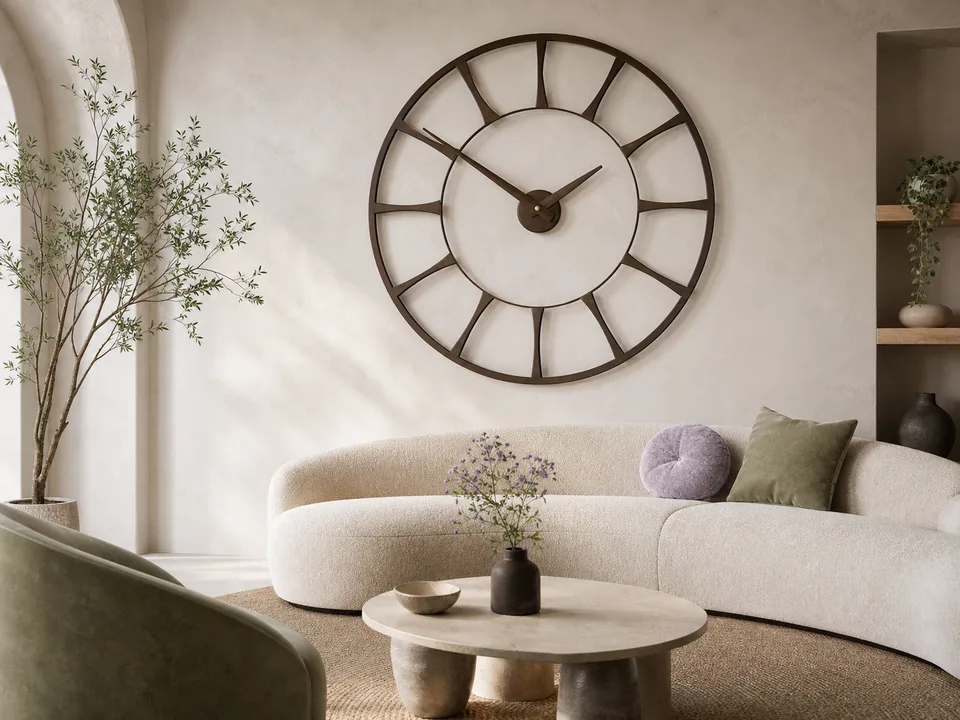
Large open-face wall clock above a sofa in a living room

Silent Wall Clocks: Choose by Movement, Light and Room Fit

For a quiet bedroom or office, choose a wall clock whose exact model documentation says non-ticking or silent sweep, then check its light behavior separately. Braun BC17W, Bulova C4846 Director and Bulova C4865 Night Vision are documented examples. This guide compares documentation, not measured noise; confirm audibility from your normal position.

Choose what must stay quiet—and what must stay dark

Documentation-based selection guide · Sources reviewed October 1, 2026. The examples below are not ranked by measured noise.

Filter for the sound you want to avoid, then check illumination and access to controls. A clock that avoids a repeated tick can still be the wrong bedside choice if its dial lights up when the room becomes dark.

  • No repeated tick: look for an explicit movement description on the exact model.
  • No scheduled melody: inspect chime controls separately from the movement.
  • No automatic night light: verify a documented light-off setting.
  • Readable from your chair or bed: compare the actual dial in that position, not the case diameter alone.

Start with the broader Wall Clocks guide when you are still deciding between display types, placement and time-setting methods. This page narrows the choice to sound and related bedroom controls.

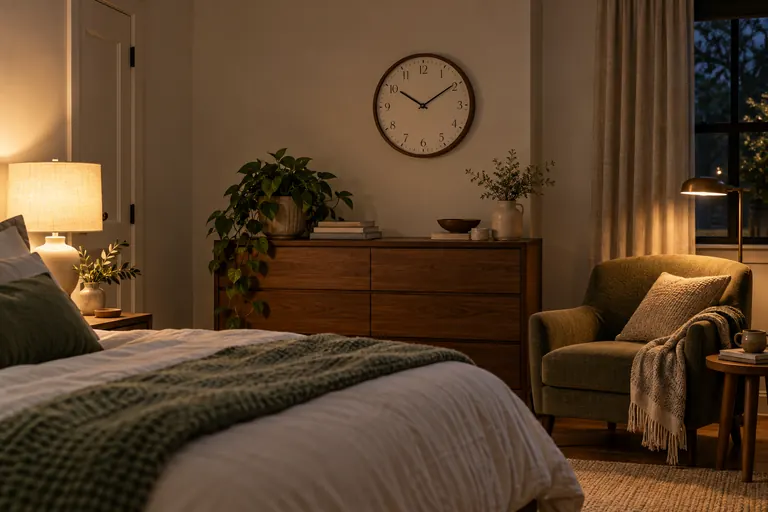
Generic wall clock above a dresser in a softly lit bedroom

Compare three documented non-ticking wall clocks

These examples all have explicit non-ticking descriptions, but differ in size, dial treatment and lighting controls. The table compares documented features—not a quietest-to-loudest result or a complete market shortlist.

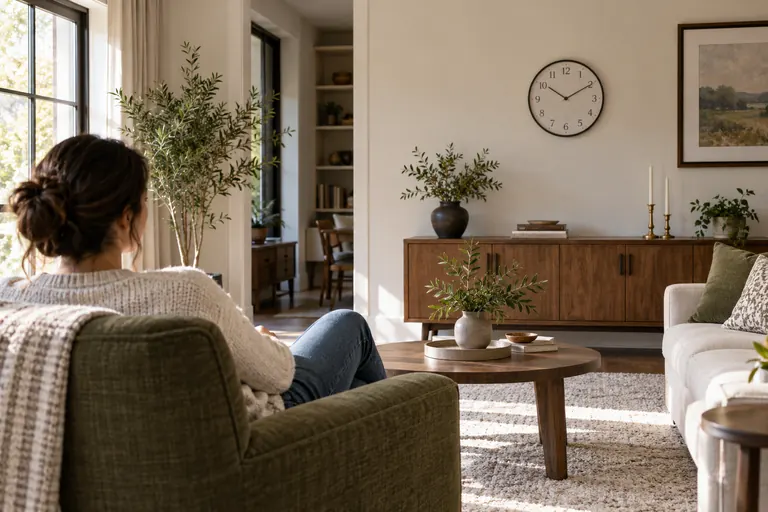
Person reading a generic wall clock from a living room chair
Compare three documented non-ticking wall clocksShow detailsHide details
Exact models and the remaining room check
ModelDocumented movementSize and powerDecision-changing detailCheck on the received unitBuying options
Braun BC17W Non-ticking sweep; quartz 300 mm (about 11.8 in) diameter; 45 mm depth; one AA 30 cm face and semi-tempered glass lens Dial contrast, reflections and audibility from your normal position Read model notes
Bulova C4846 Director Non-ticking sweep; quartz 16 in diameter; 1.8 in depth; one AA Raised tone-on-tone numerals, blue seconds hand and glass lens Whether the similar-tone numerals remain clear in your lighting Read model notes
Bulova C4865 Night Vision Non-ticking sweep; quartz 10 in diameter; 1.75 in depth; four AA total Automatic low-light dial illumination with a separate off switch Lighting behavior, rear-switch access and audibility Read model notes
BC17W: check the face, not just the silent-sweep label

Braun BC17W — white

Consider this model when its roughly 12-inch footprint fits the wall. The glass lens and dial still need checking for reflections from your actual seat. Its maker's non-ticking description is useful evidence, but not proof of how the clock will sound in your room.

Check before buying: Dial contrast, reflections and audibility from your normal position
C4846: a larger case with a different contrast question

Bulova C4846 Director — satin pewter

Consider Director when you want the larger 16-inch format and raised numerals. Similar-tone markings should be inspected in both your daytime and evening light. A larger outside diameter does not establish a longer readable distance; the Wall size and readability checks explain that distinction.

Check before buying: Whether the similar-tone numerals remain clear in your lighting

C4865: optional illumination changes the choice

Bulova C4865 Night Vision

Consider Night Vision if you want dial illumination with a documented off switch. Its smaller case does not remove the need to reach the controls on the back. See the power and switch details below before choosing a high mounting point.

Check before buying: Lighting behavior, rear-switch access and audibility

Check the exact model number and seller's current listing before ordering. These are two manufacturers' documented examples, not a claim of stock, the lowest price or the three quietest clocks available.

What do silent, non-ticking and quiet actually establish?

An explicit non-ticking sweep description is stronger evidence for avoiding a tick than the word quiet alone. Neither is a measurement of what you will hear at a particular distance.

Two examples show why the wording matters. Braun calls BC06B a quiet quartz clock but does not explicitly identify a non-ticking sweep in the product text checked here. Howard Miller identifies a soft tick and no chime for Virgo 625381. BC06B therefore remains unresolved for a strict no-tick requirement; Virgo is not a no-tick example.

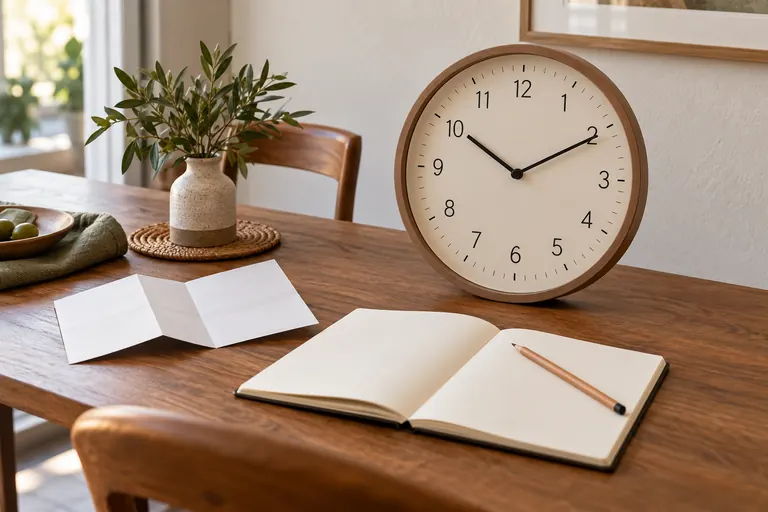
Generic analog wall clock beside a notebook and instruction leaflet
What do silent, non-ticking and quiet actually establish? Show detailsHide details
Read the claim without adding a promise
Wording or featureUseful interpretationDo not infer
Non-ticking / silent sweep The maker explicitly describes a sweep movement without the regular tick. A measured decibel level, complete inaudibility or guaranteed sleep improvement.
Quiet quartz A general sound description; the movement needs model-specific confirmation. The same mechanism as another model from that brand.
No chime / night shut-off A statement about a melody or a specified night function. The sound level of every moving part.
Light-off setting A control for illumination. A change in movement noise or automatic timekeeping.

For a dark room, check the light switch and battery roles

C4865 can stop lighting its dial without stopping its timekeeping. Its manufacturer-linked 66S instructions distinguish one AA for the clock from three AA for the LEDs.

The rear lighting switch enables automatic low-light illumination in its ON position. OFF keeps the LEDs off in daylight and darkness. Four AA in the product specification is therefore the total, not four cells all dedicated to the movement.

Choose and verify the setting before hanging the clock. For a high or awkward location, decide whether reaching that rear switch is acceptable. Do not import the battery arrangement of another Bulova model, and do not interpret a bathroom-use description as permission for shower spray.

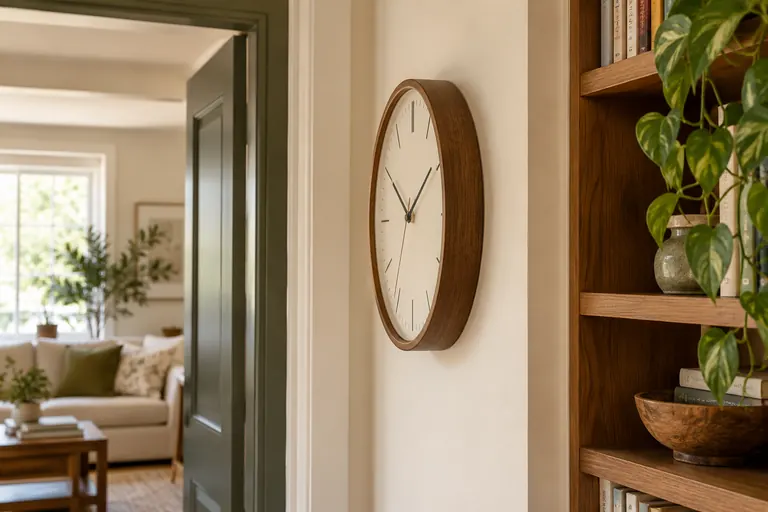
Side view of a generic wall clock near a doorway and bookshelf

Keep time setting separate from sound and lighting

A sweep hand does not establish radio synchronization, Wi-Fi support or automatic daylight-saving adjustment. Verify each feature on the exact model rather than borrowing it from a similarly named clock.

The instructions linked to C4846 and C4865 use a rear hand-set knob. They tell the owner not to push the hands manually. Use the matching instructions and supplied controls; removing a seconds hand or bending it is not the selection method proposed here.

When automatic correction is a separate requirement, compare the radio-time and manual-setting limits. A quiet-room requirement and a time-zone requirement can eliminate different models.

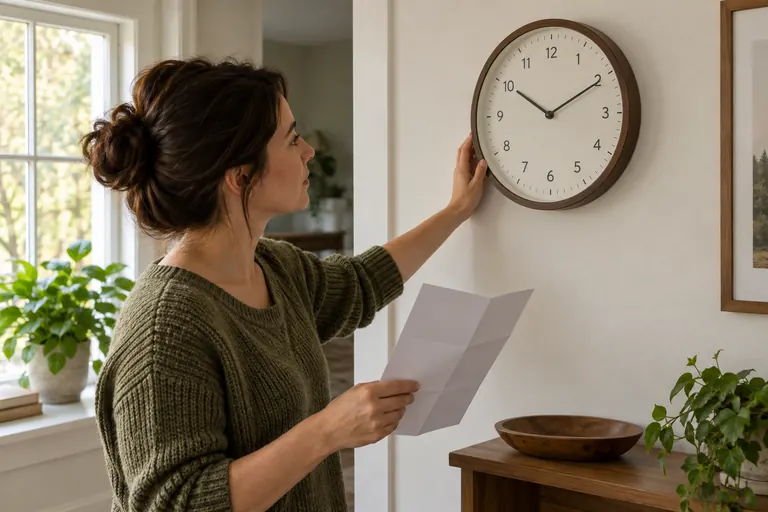
Person checking a generic wall clock with an instruction leaflet

Use one room check before keeping the clock

Judge the delivered clock from where you will normally hear and read it. Treat the result as a qualitative check of that unit and placement, not a calibrated acoustic test.

  1. Confirm the unit. Match the model label, controls and instructions. Note the battery type and verify that the clock is set and running normally.
  2. Use a permitted, secure position. Follow the supplied mounting instructions. Do not obstruct the mechanism or change its mounting with an improvised soundproofing layer.
  3. Listen in normal use. Check from the bed, chair or desk during a naturally quiet period. Reduce optional background sound where practical, without disabling safety equipment. Note a repeated tick, hum or other sound rather than assigning an unsupported decibel value.
  4. Check the same position after dark. Observe any automatic light, its off setting and dial readability. Do not solve a lighting problem by assuming that a non-ticking mechanism also controls illumination.
  5. Record the decision. Note model, position, lighting state and what you could hear or read. For unexpected noise, consult the manual and contact the seller or manufacturer; check the return terms instead of attempting a mechanism modification.

No controlled sound measurements, battery-life tests or household sleep outcomes are reported here. A video or a phone recording is not treated as a calibrated comparison between these models.

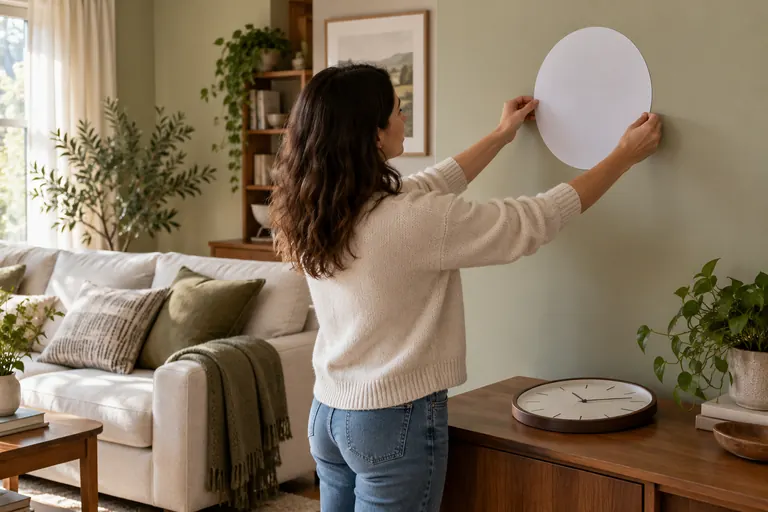
Person holding a round paper outline against a wall before mounting a clock

Check the exact offer before ordering

Match the model, finish, revision and included parts to the option you chose. Compare the seller’s checkout total and return terms; a familiar brand name or similar photo does not establish an identical clock.

Model notes remain available when no verified seller link is shown. A listed feature describes the product documentation, not a hands-on test or a promise of stock.

Silent wall clock questions

Use the exact model's documentation for the feature claim and the received unit for the room check. Check those separately.

Are silent wall clocks completely inaudible?

A non-ticking or silent-sweep label is a manufacturer description, not a sound-level measurement for your room. This guide has no comparable acoustic readings for the three examples. Check the delivered clock from the position where you will use it.

Check audibility in your room

Does quiet quartz mean the same thing as non-ticking?

Not necessarily. Braun describes BC06B as quiet, while BC17W has an explicit non-ticking sweep description. Do not transfer the wording between models or assume that an unspecified movement must tick.

Compare the documented sound terms

Can a clock have no chime and still tick?

Yes. Howard Miller describes Virgo 625381 as having a soft tick and no chime. A chime setting and movement noise are separate checks.

Separate movement sound and chimes

Can I turn off the light on Bulova C4865?

Yes. Its linked 66S instructions describe a rear lighting switch whose OFF position keeps the LEDs off during the day and night. The clock uses one AA battery for timekeeping and three AA batteries for the lighting.

Read the battery and light-switch details

Does a sweep hand prove that a clock is radio-controlled?

No. Hand motion and automatic time correction are different specifications. Check the exact model documentation for each feature instead of treating one as proof of the other.

Keep hand motion and time correction separate

Should I remove the second hand to stop a clock ticking?

Do not modify the clock as a routine noise fix. The linked Bulova instructions say to set time with the rear knob and not move the hands manually. For an unexpected sound, check the exact instructions and ask the seller or manufacturer about the received unit.

Use the documented time-setting controls

Sources and limits

The technical source review below remains dated October 1, 2026. Buying-option records were assessed separately on October 8, 2026; an incomplete or unverified offer is not treated as an available purchase. No physical product testing is claimed.

The manufacturer pages and linked instructions support the stated features. They do not establish an acoustic winner, a universal reading distance or a guarantee that a particular person will find a clock inaudible.

Sources were reviewed on October 1, 2026. No physical testing by TOPCLOCKS is claimed for these examples. See how TOPCLOCKS labels evidence. For a documented discrepancy, send the exact model and statement for correction.